



SEMANTIC SEARCH

Goodbye hours of research.Hello AI semantic search.

Need to write an essay or research paper and don’t know where to start? Thesify’s intelligent research assistant Theo finds the most relevant resources for you across 200 million+ high-quality references.

Theo clearing a path through piles of literature

Trusted by more than 30,000 academics at leading universities

EPFLHarvardOxfordETH ZurichUCLCambridge

IN SHORT

What is semantic search for research?

Semantic search finds relevant literature by meaning rather than exact keywords. Thesify’s Semantic Search understands the concepts, statements and findings in your work and surfaces the most relevant journal articles to cite — so you miss nothing important and find the right source in minutes.

200M+
Peer-reviewed articles searched by meaning
Zero
Invented references — every source is a real paper
Any field
Including the neighbouring ones you would miss

How does itwork?

Give Theo your assignment instructions and a few keywords, and he searches our database of over 200 million high-quality references to give you the best place to start. Theo can also summarise articles and give you a structured digest of their main points — so you can quickly decide whether a resource belongs in your manuscript.

Try Semantic Search
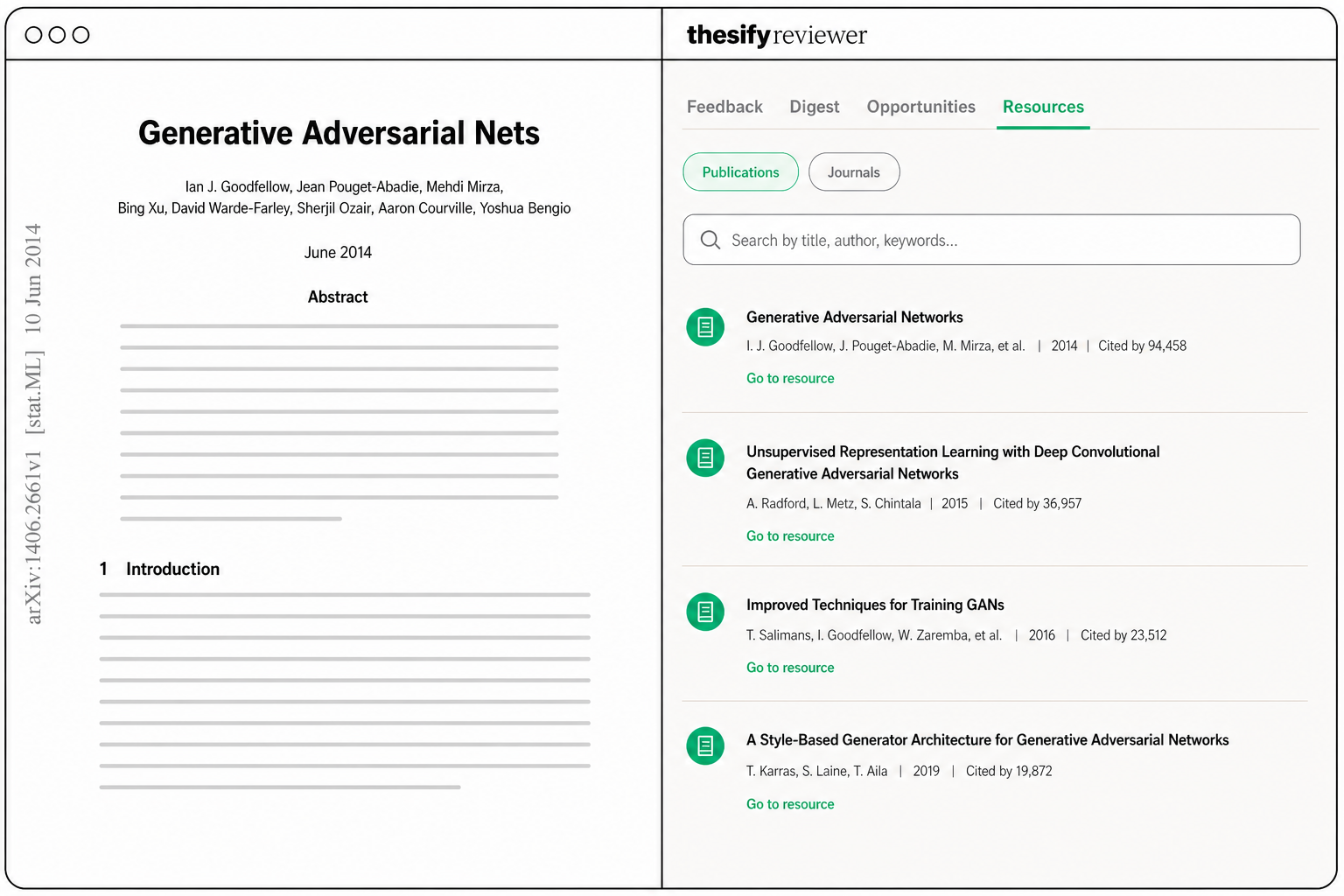
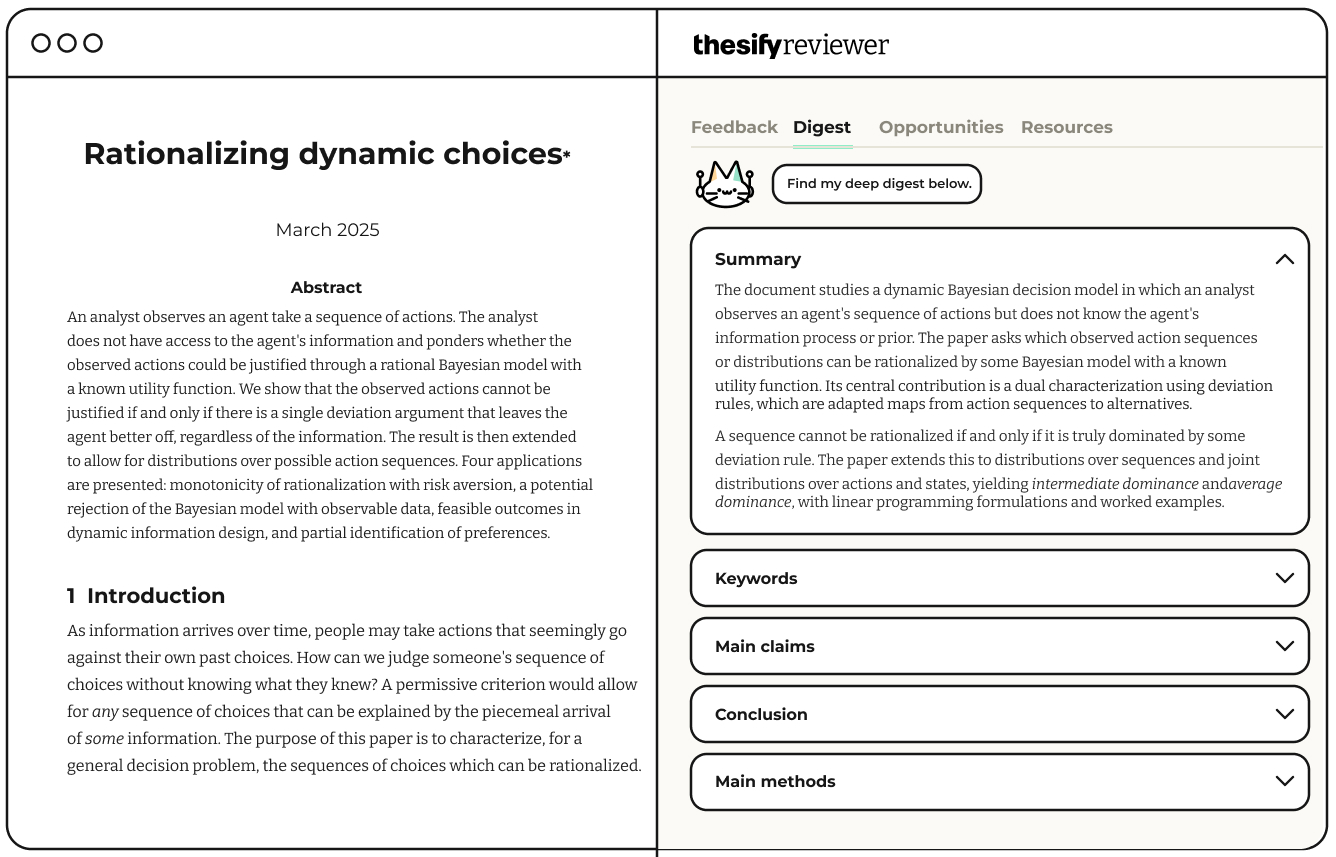
Thesify semantic article search returning relevant references

Search by meaning,not by keyword.

Keyword search only finds the papers that happen to use your vocabulary — a problem when the same idea has three names across two fields. Describe the concept, the claim or the finding you need support for, and Theo returns work that means the same thing, including the papers you would never have thought to search for.

Try Semantic Search
Semantic search results for a described concept

From a resultto something you can use.

Every result can be digested into its main claims, methods and conclusions, and kept in your library next to the manuscript it belongs to. Sources you keep are real, indexed publications with working links — so nothing in your reference list has to be verified after the fact.

Start Searching
A search result saved to a project library with its digest

WHY THE RESULTS HOLD UP

Every source is a real paper you can open.

The failure mode of AI-assisted literature work is a confident citation that does not exist. Thesify is built so that cannot happen.

No hallucinated references

Results come from an index of published literature, not from a language model’s memory. Nothing is generated.

200M+ peer-reviewed articles

Broad enough for interdisciplinary work, including the neighbouring fields your keywords would have missed.

Full text where it is available

Accessible articles are surfaced as such, so you spend your time reading rather than hunting for a copy.

Digests on demand

Turn any result into a structured summary before deciding whether it belongs in your manuscript.

Kept with your project

Saved sources stay in the library attached to the work you are writing, not in a chat you cannot search.

Your drafts stay private

What you search and what you upload is never shared and never used to train AI models.

WHY SEMANTIC SEARCH

Start your literature review the smart way.

The hardest part of a literature review is the beginning: you cannot search precisely for work you have not read yet. Theo’s AI-powered article finder helps you…

Kick-start discovery

Jump-start your literature discovery with top literature suggestions.

Find full-text fast

Speed up your search by surfacing full-text accessible articles immediately.

Judge relevance quickly

Save time sorting through endless papers by quickly determining relevance.

Cite the right source

Find articles to cite for a given concept, statement, idea, or finding.

Miss nothing relevant

Make sure you aren’t missing any relevant journal articles for your assignment.

What researchers are saying

Andy Stapleton

Andy Stapleton

@DrAndyStapleton

It is the academic tool kit we have been waiting for. There's so many ways you could use this, but ultimately, for what it does - give you feedback, making sure you're meeting academic standards - it doesn't get much better at the moment.

Neha Agrawal

Neha Agrawal

@WiseUpCommunications

I was super impressed with the evaluation because it was able to pick up minute, yet important gaps in my research, which even a well-read professor would have missed out. With this kind of in-depth feedback, you can be quite sure that your work is going to meet the requirements of your supervisor and peer-review process of journals.

Amina Yonis

Amina Yonis

@DrAminaYonis

It's a beautiful tool because it not only enhances your writing but also increases your confidence by maintaining your unique tone while explaining the rationale behind each improvement.

As seen in

NatureForbesUSA Today20 MinutenBerner Zeitung

Frequentlyasked questions.

What makes semantic search different from Google Scholar? +

Keyword tools match the words in your query against the words in a paper. Semantic search matches meaning, so you can describe a concept, a claim or a finding in your own language and still reach the literature that uses different terminology — which is exactly where interdisciplinary work tends to get lost.

Will it invent references? +

No. Results are retrieved from an index of over 200 million published, peer-reviewed articles rather than generated by a language model. Every source is a real paper you can open, which is the difference between literature search and a chatbot guessing at a plausible citation.

How large is the index and what does it cover? +

Over 200 million peer-reviewed journal articles across disciplines. Coverage is strongest where publishers and open indexes make metadata and full text available, which includes the great majority of active research literature.

Can I search for support for a specific sentence in my draft? +

Yes, and it is one of the most useful ways to work. Give Theo the statement you want to support and he returns articles that address that claim, so you can cite the right source instead of the one you happen to remember.

Does it replace a systematic review search? +

No. A systematic review needs a documented, reproducible search strategy in the databases your protocol specifies. Semantic search is for discovery — finding the work you did not know to look for, and getting a literature review started quickly.

academic integrity.

Find the right sources in minutes, not days.

Get Started