




PAPER DIGEST

Goodbye hours of reading.Hello Paper Digest.

Skimming a whole list of references is time-consuming and hard — and even the most advanced chatbots only give you a superficial overview. Thesify’s Deep Digests break down any paper into a structured, trustworthy summary.

Theo turning a dense paper into a structured summary

Trusted by more than 30,000 academics at leading universities

EPFLHarvardOxfordETH ZurichUCLCambridge

IN SHORT

What is an AI paper digest?

An AI paper digest is a concise, structured summary of a research paper. Thesify’s Paper Digest reads any article and extracts its main claims, methods and key findings in seconds — so you can judge relevance, understand a paper fast and decide what’s worth reading in full.

Seconds
To a structured digest of any paper
6 sections
The same shape for every paper you digest
200M+
Indexed articles, plus anything you upload

For references inyour library.

Search Thesify’s database of over 200 million peer-reviewed journal articles. Theo instantly generates a structured digest of each article — its main points, strengths and weaknesses. Find it in the Resources tab, open it in its own window, and share it with a link.

Try Paper Digest
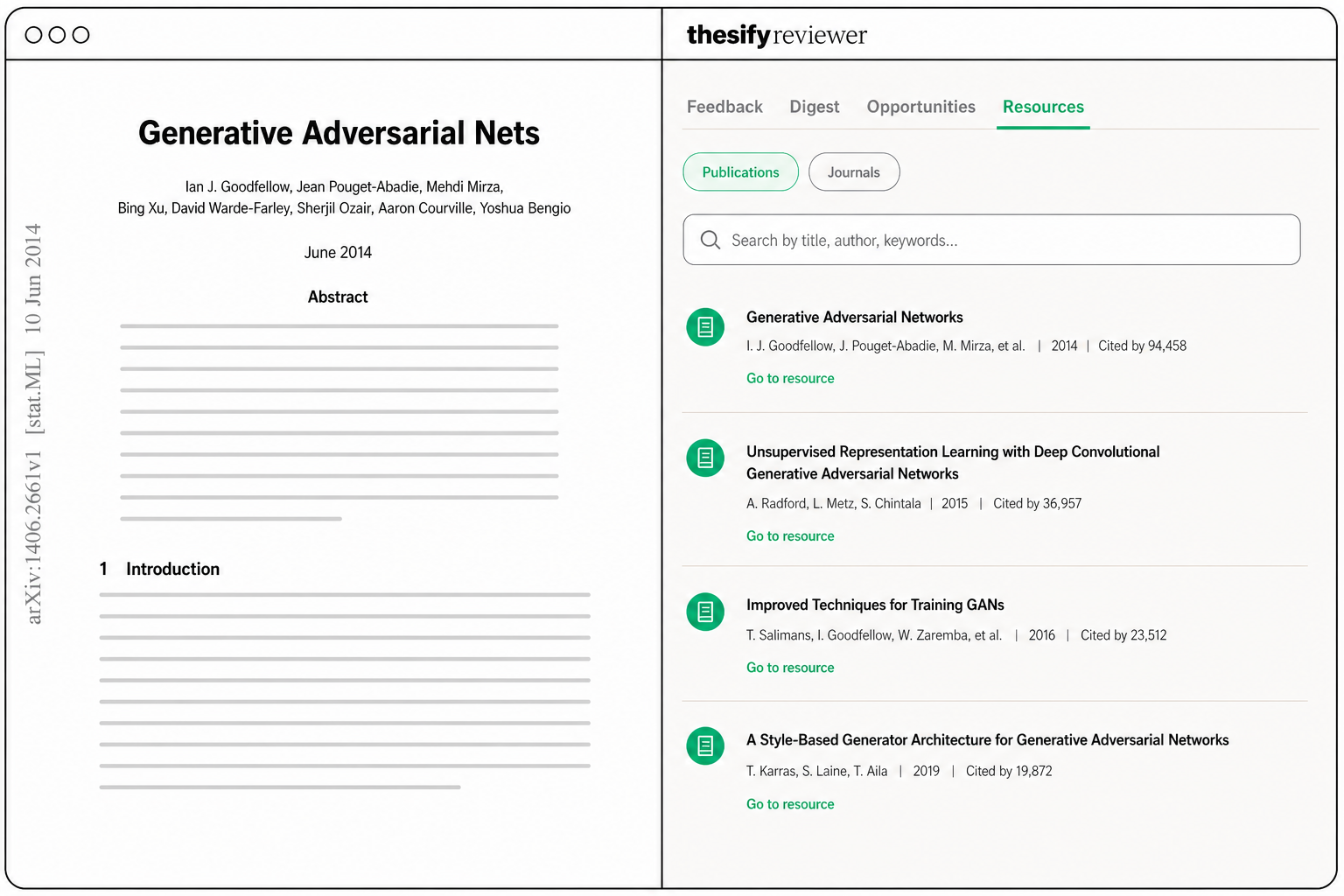
Thesify Resources tab showing Theo’s digest for a publication

For documentsyou upload.

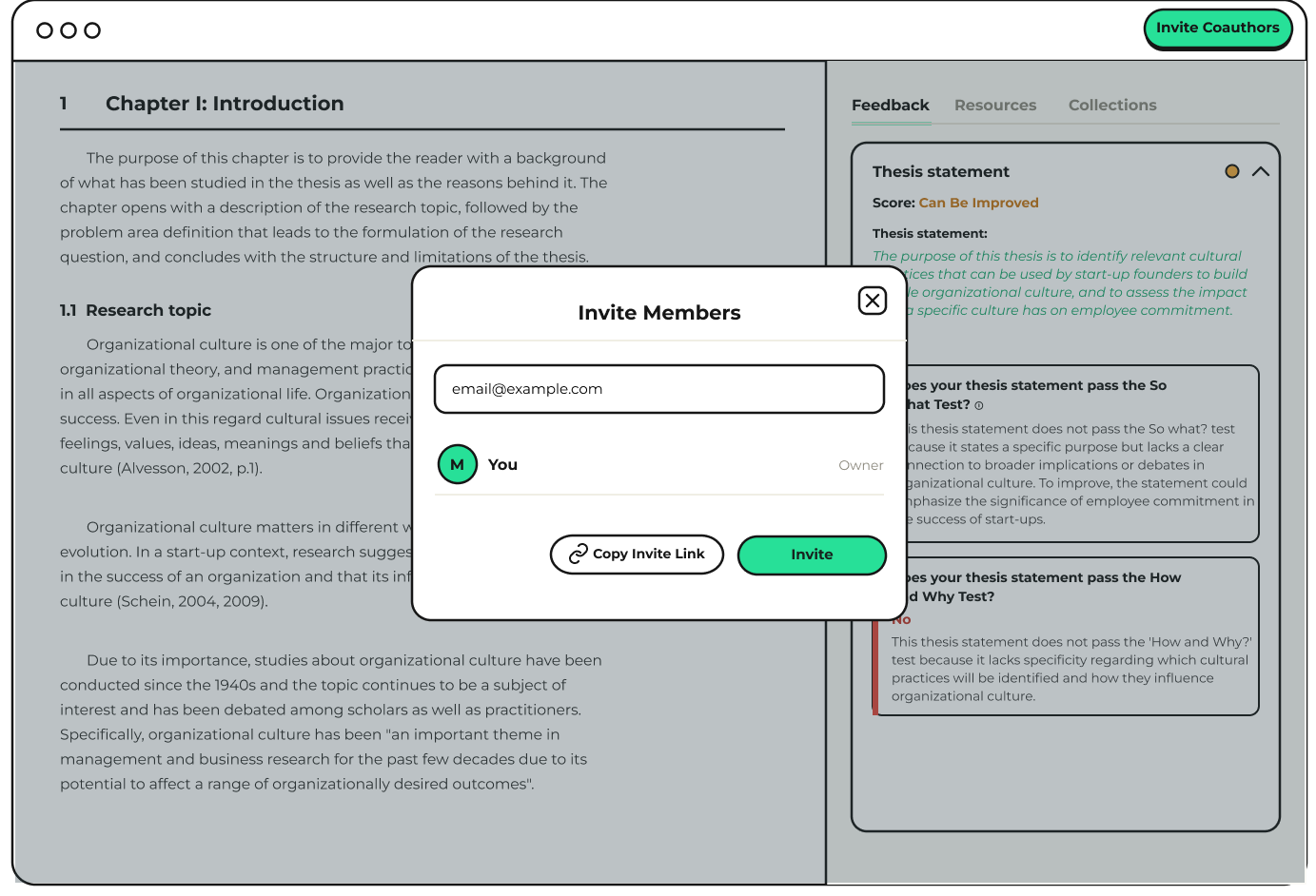
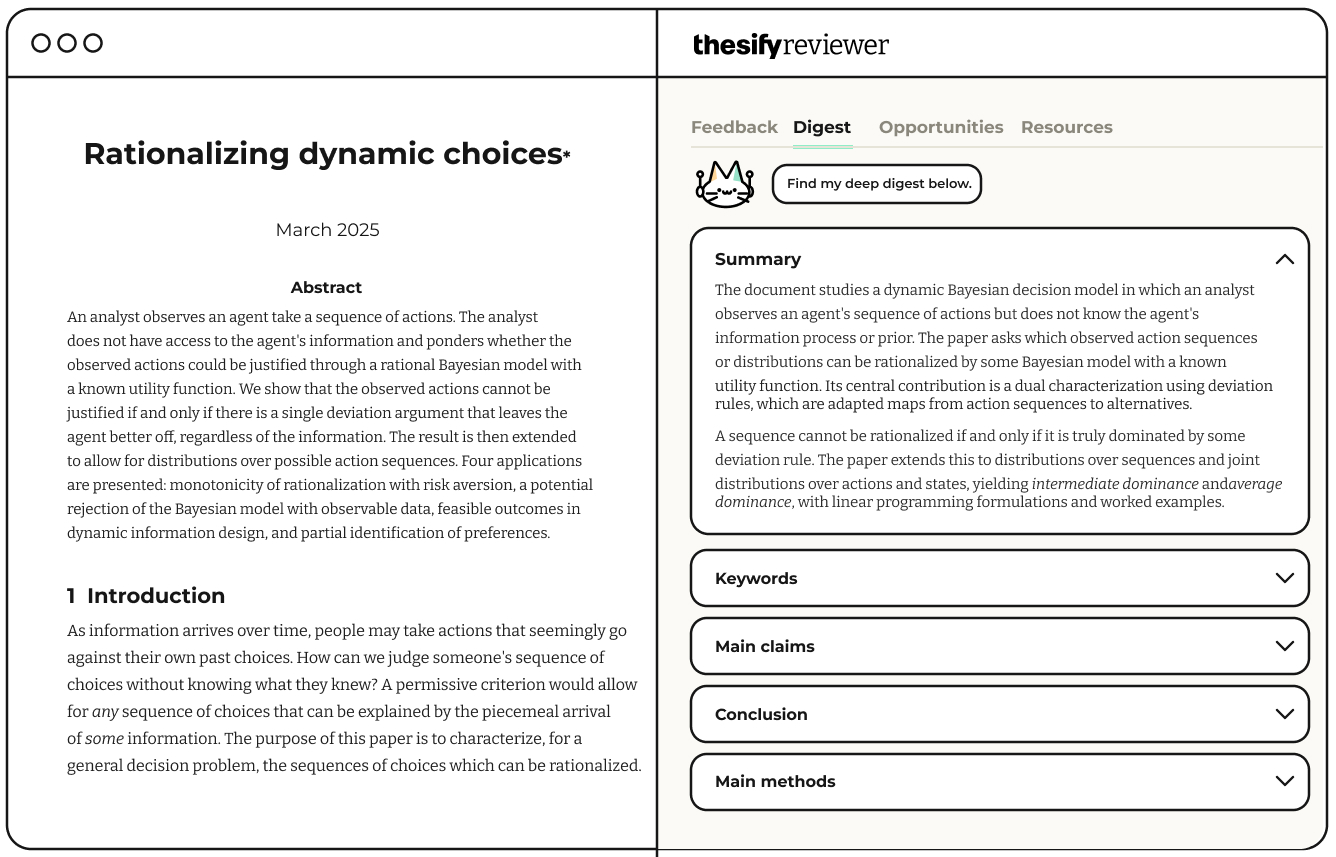
Simply upload your paper and select Digest in the menu. Theo quickly generates a structured digest of the article — summary, strengths and weaknesses — right next to the Feedback section.

Try Paper Digest
Thesify digest shown alongside feedback for an uploaded paper

Keep the digestwith the paper.

Digests live next to the reference in your library rather than in a chat history you will never scroll back through. Open one in its own window while you write, or share a link with a co-author or reading group so everyone starts from the same summary.

Try Paper Digest
A digest opened in its own window and shared by link

WHAT’S INSIDE

Everything a Deep Digest covers.

Each digest is broken into clear, skimmable sections so you can decide in seconds whether a paper is worth a deep read.

Original abstract

The paper’s abstract exactly as published.

Summary

Theo’s plain-language summary of the paper.

Keywords

The key topics and terms the paper covers.

Main claims

What the authors report as their main results.

Conclusion

A summary of the paper’s conclusions.

Main methods

A summary of the methods used to obtain the results.

For the reading you cannot avoid.

A digest is not a replacement for reading the papers that matter. It is how you find out which ones those are.

01

Triaging a search

Forty results, four worth reading. Digest the list, decide from the main claims and methods which four earn a full read, and stop skimming abstracts that were written to sell the paper.

02

Reading outside your field

An unfamiliar methods section is slow going. A plain-language account of what was done and what was found gives you the footing to read the parts that matter to you.

03

Preparing a journal club

Arrive with the claims, methods and weaknesses already laid out, and spend the hour discussing the paper instead of reconstructing it.

WHY PAPER DIGEST

Read less, understand more.

Reading is the part of research that scales worst. A structured digest of every candidate paper turns a reading list into a decision you can make in an afternoon.

Find trusted references

Discover and research trusted references for your essay or thesis.

Understand complex papers

Make sense of complex scientific articles, even outside your field.

Grasp key concepts fast

Identify and summarize the key concepts of a dense article within seconds.

Know what’s worth reading

Quickly determine whether a journal article is worth an intensive read.

What researchers are saying

Andy Stapleton

Andy Stapleton

@DrAndyStapleton

It is the academic tool kit we have been waiting for. There's so many ways you could use this, but ultimately, for what it does - give you feedback, making sure you're meeting academic standards - it doesn't get much better at the moment.

Neha Agrawal

Neha Agrawal

@WiseUpCommunications

I was super impressed with the evaluation because it was able to pick up minute, yet important gaps in my research, which even a well-read professor would have missed out. With this kind of in-depth feedback, you can be quite sure that your work is going to meet the requirements of your supervisor and peer-review process of journals.

Amina Yonis

Amina Yonis

@DrAminaYonis

It's a beautiful tool because it not only enhances your writing but also increases your confidence by maintaining your unique tone while explaining the rationale behind each improvement.

As seen in

NatureForbesUSA Today20 MinutenBerner Zeitung

Frequentlyasked questions.

How is a Deep Digest different from an abstract? +

An abstract is written by the authors to present the paper in its best light, and it routinely omits limitations, sample details and methodological caveats. A digest is a structured read of the paper itself: summary, main claims, methods, conclusions and keywords, presented in the same shape every time so you can compare papers rather than marketing.

How is it different from asking ChatGPT to summarise a paper? +

A general chatbot will summarise whatever text you paste and, if it lacks the paper, will produce something plausible anyway. Paper Digest works from the indexed publication or the file you upload, always returns the same structured sections, and never invents a source or a finding to fill a gap.

Which papers can I digest? +

Anything in our index of over 200 million peer-reviewed articles, and any PDF you upload yourself — including preprints, working papers and drafts that are not published anywhere.

Can I share a digest with my co-authors or students? +

Yes. Every digest can be opened in its own window and shared with a link, which is how most reading groups and supervisors use it.

Should I cite a paper based only on its digest? +

No. Use a digest to decide what deserves a full read and to check whether a paper supports the point you want to make. If a source is load-bearing for your argument, read it properly — a digest tells you which sources those are.

academic integrity.

Turn hours of reading into minutes of understanding.

Get Started