
How Researchers Are Using AI to Gain New Perspectives on Academic Writing
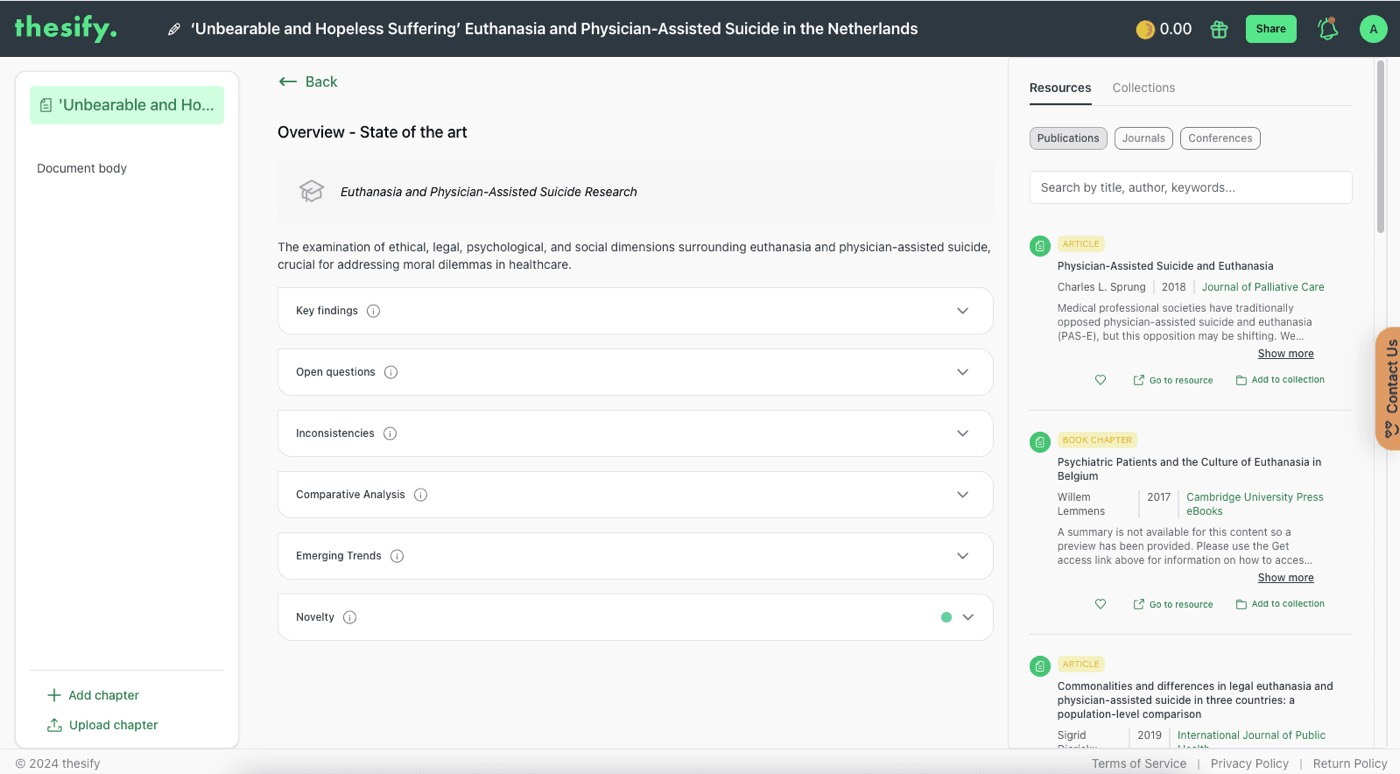
Table of contents
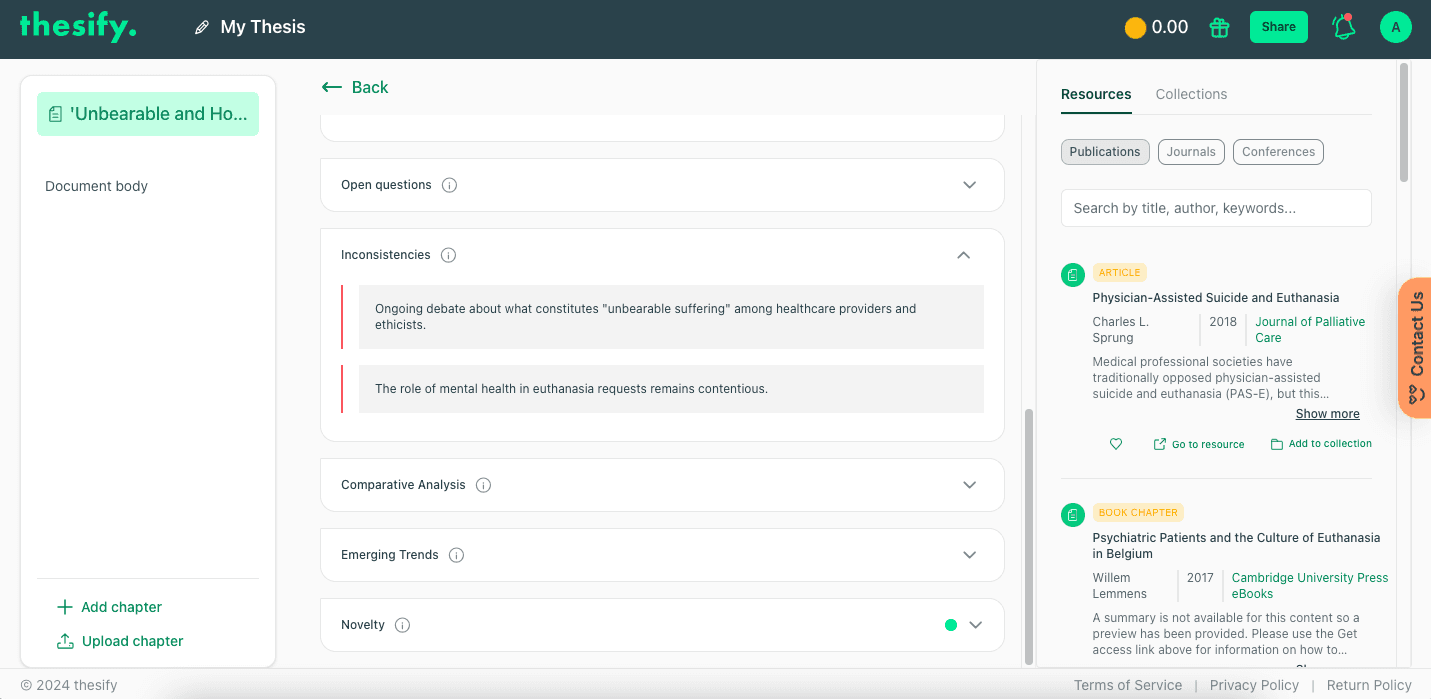
Researchers are using AI in academic writing for something more interesting than fixing grammar: to see a draft from the outside. A paper only earns its place by adding to a conversation already in progress, and the hardest thing to judge from inside your own manuscript is whether it does that — or whether it restates what three other groups published last year.
That judgement used to require a supervisor with time, or a colleague who happened to know the same literature. Increasingly it is a thing you can ask software to do on a draft you have already written.
Why Your Own Draft Is the Hardest Thing to Read
By the time a manuscript is finished you have lost the ability to read it as a stranger. You know what each sentence was meant to convey, so you see the intention rather than the words. You know why the study was designed the way it was, so an omitted justification still feels present. And you have been immersed in a narrow slice of literature for months, which makes your contribution feel more obvious and more novel than it will to an editor who reads forty abstracts a week.
This is the gap that sinks a lot of good work. Desk rejection is rarely a verdict on the science; it is usually a verdict on whether the contribution was legible in the first 15 minutes. The same blind spot shows up in the most common reasons papers get rejected, where "no clear contribution" and "poor fit" sit at the top of the list.
What you need is not more polish. It is a second reading, by something that does not already know what you meant.
What a State-of-the-Art Analysis Actually Does
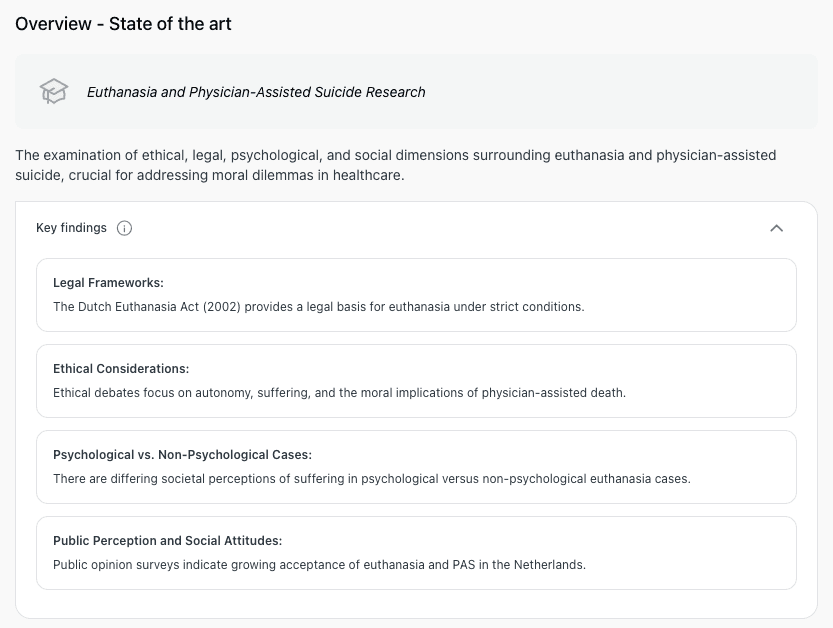
Thesify's State of the Art analysis reads your draft, works out what field it is speaking to, and reports back on where that conversation currently stands. It comes in three parts, each answering a different question.
An overview of the field
A synthesis of the dominant themes, live debates and foundational work relevant to your topic. This is the part that answers "who else is in this room?" — useful precisely when your reading has been deep but narrow, and you are about to claim novelty against a literature you sampled rather than surveyed.
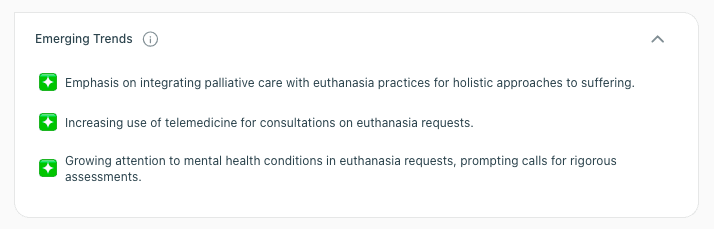
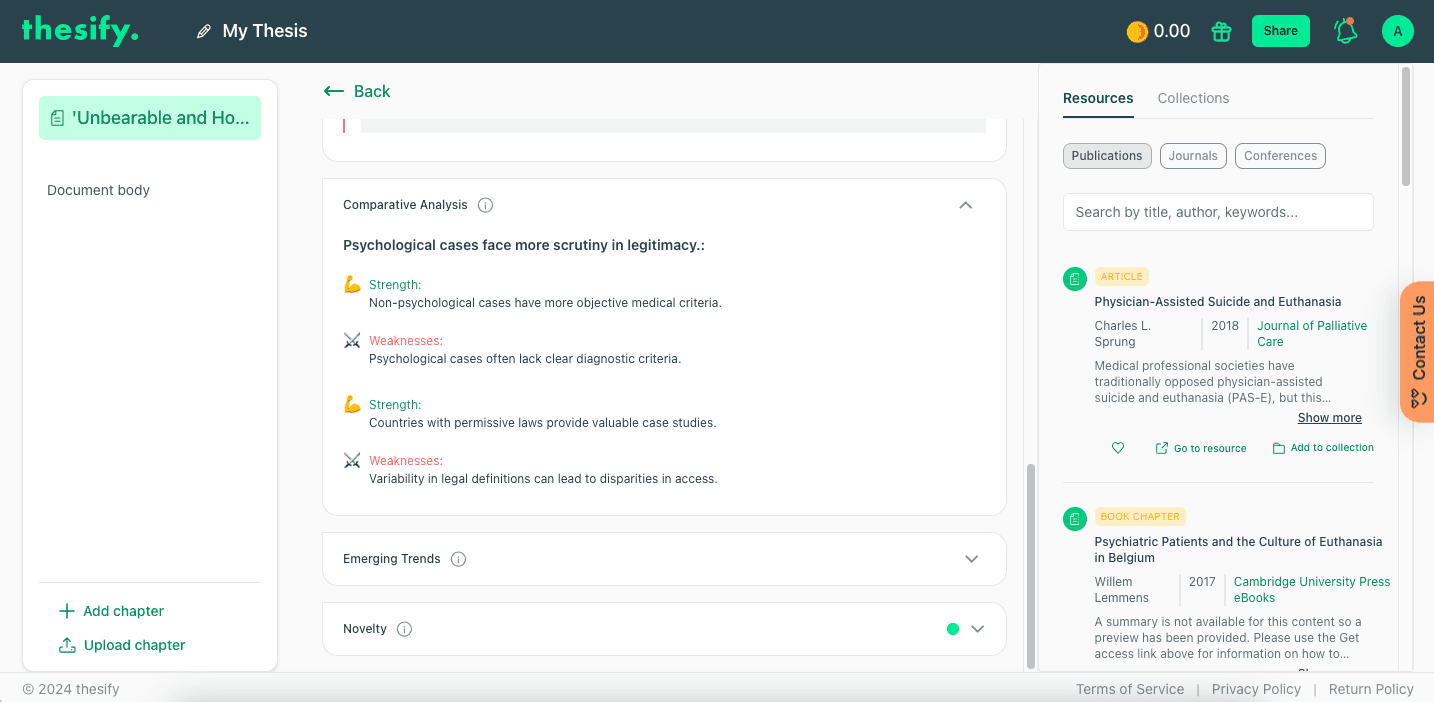
A comparative view of the approaches
A side-by-side reading of the methods, models or technologies in play, with the strengths and weaknesses of each. The practical use is defensive: it tells you which alternative a reviewer is most likely to ask why you did not use, so you can address that choice in the methods rather than discover it in the decision letter.
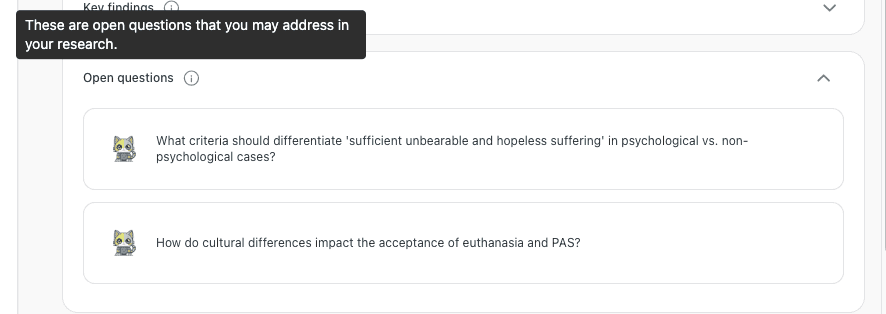
The open questions
The gaps and under-explored threads that your own draft implies. Some of these are the contribution you are already making, stated more sharply than you stated it. Others are the next paper. Occasionally one is a hole in the current one.
Reading the Output Without Over-Trusting It
The analysis is a prompt for your judgement, not a substitute for it. Three habits keep it useful.
Treat a claimed gap as a hypothesis. If the analysis says a question is under-explored, that tells you the question is not prominent in what it read. Search for it yourself before you build an introduction around it, because "nobody has studied this" is the single easiest claim for a reviewer to disprove.
Read the comparative section for objections, not for validation. The value is in the approaches you did not take. If your method looks weaker on some dimension, say so in the paper and explain the trade-off. A stated limitation is far cheaper than a discovered one.
Check the field it thinks you are in. If the synthesis describes a conversation you do not recognise, that is diagnostic in itself: your framing is pointing at the wrong audience, which is a journal-fit problem you want to find now rather than after submission.
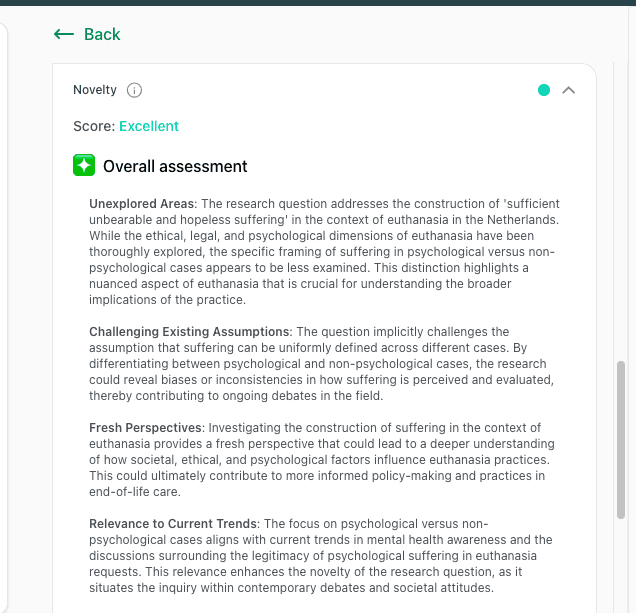
A verdict like the one above is the clearest case for reading sceptically. "Excellent" is a reading of how your question sits against what the tool surveyed, not a promise about how an editor will receive it.
Where This Fits in the Writing Process
Run it on a complete draft rather than an outline. The analysis works from what your manuscript actually claims, so a skeleton produces a vague reading of a vague document.
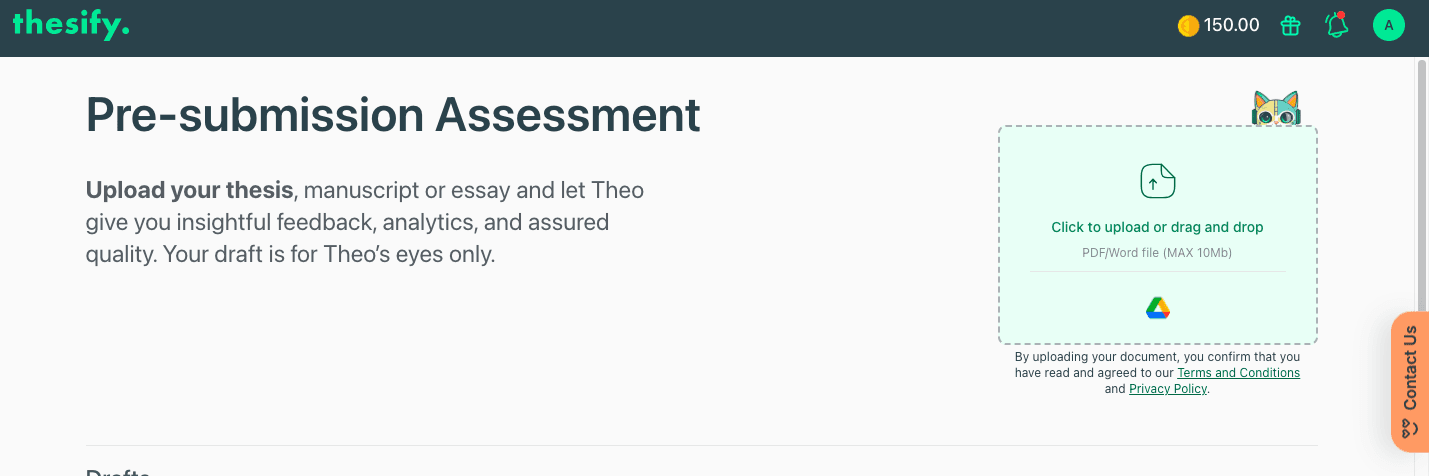
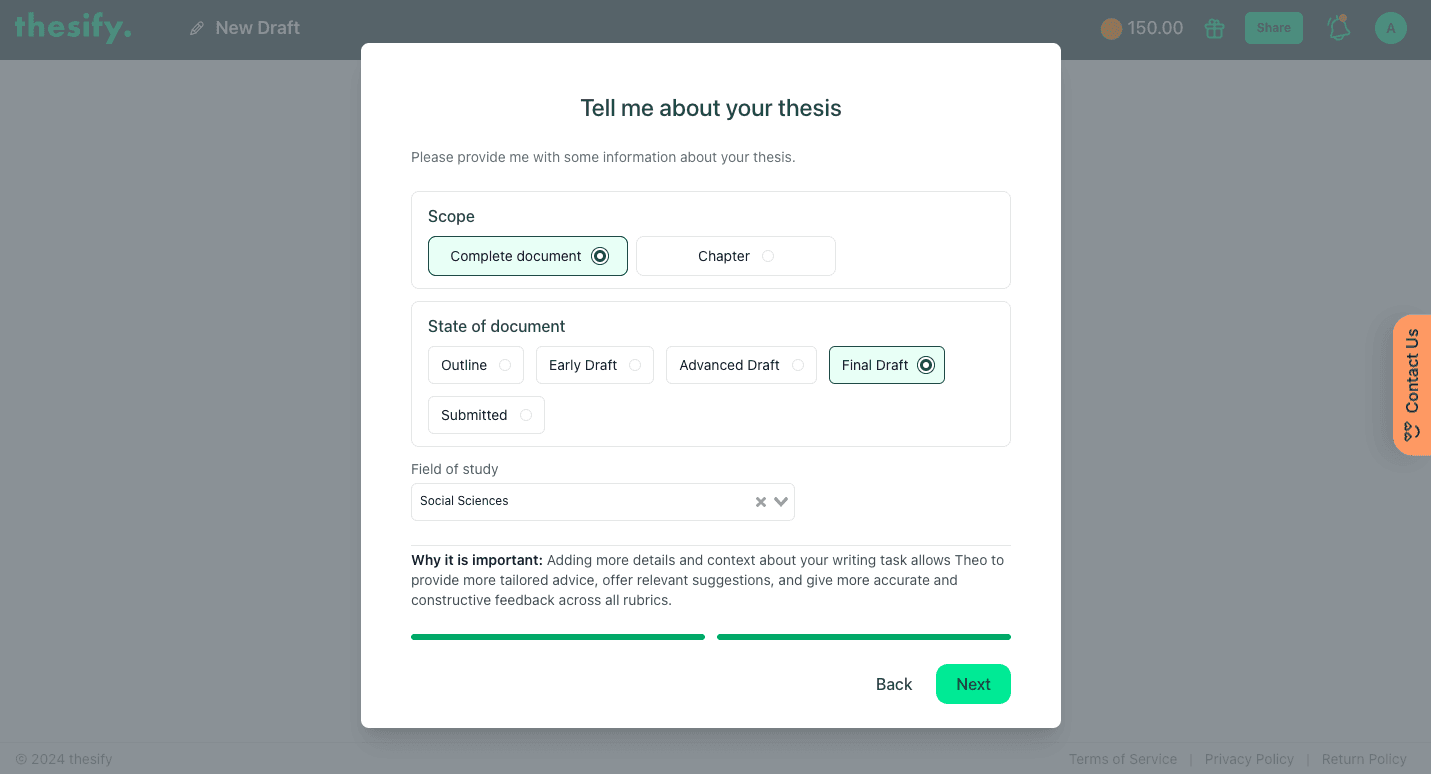
The state of the document matters here: a complete draft and an outline produce very different readings.
The natural moment is the gap between "the draft is finished" and "I am choosing a journal", when the framing is still soft enough to change and the evidence is fixed enough to judge. That is also when a shift in framing is cheapest: rewriting an abstract and introduction to speak to a different conversation takes an afternoon, while discovering the mismatch after a rejection costs you a review cycle.
It pairs naturally with two other passes. Semantic search finds the specific papers behind a gap the analysis surfaced, and paper digest gets you through them quickly enough to actually cite them. For the wider sequence from draft to acceptance, see how to publish a research paper.
What It Does Not Do
Worth being explicit, because the category is oversold generally.
It does not decide whether your contribution is significant. It maps the conversation; the judgement of whether your work matters within it stays with you and your reviewers.
It does not guarantee coverage of your literature. No tool reads everything, and coverage varies by field, language and how well indexed your corner of the literature is. Treat the synthesis as a strong starting map, not a systematic review.
It does not write the paper. The output is an assessment of a draft you wrote. Everything it surfaces still has to be argued in your own words, with your own evidence.
FAQ
How is this different from asking a chatbot about my field?
A general chatbot answers from what it absorbed in training, with no particular grounding in your manuscript. A state-of-the-art analysis starts from your actual draft — its claims, its methods, its framing — and reports the field in relation to that. The difference shows up most in the gaps section, which is only useful if it knows what you already did.
When in the writing process should I run it?
On a complete draft, before you commit to a journal. Early enough that the framing can still change, late enough that there is a real argument to assess.
Can it tell me if my contribution is novel?
It can tell you what is already prominent in the conversation and where the obvious openings are, which is most of the work. It cannot certify novelty, and neither can any tool: that judgement belongs to editors and reviewers who know the field.
Does it replace reading the literature?
No. It gets you to the right literature faster and stops you from missing a debate you should have known about. You still have to read the papers you cite.
See your draft the way the next reviewer will. Thesify Reviewer runs a pre-submission review of your manuscript, from contribution framing and methodology to the state of the art your work is arguing with, before a journal ever sees it. Try Thesify Reviewer